Do You Train Your Squirrels? [ July 16th, 2010 ] Posted in » Blog

My Kindergarten Class

Since I moved into my home nine years ago, I’ve had squirrels.  My property backs up to a wooded area that borders several properties so I’ve had my fair share.  When I started birding seven years ago I decided that I would feed them as well.  Since I employ a raccoon baffle on my main feeder station and squirrel baffles on my bluebird houses, I wasn’t concerned about my back yard becoming overly popular.  I have a corncob feeder and squirrel box on my back fence and a squngee hanging from one of my smaller trees.  There was an initial learning curve for them to learn and trust these feeders but with a mixture of adults and children back there the knowledge was acquired.  Whether it took an adult to learn and show a little one or the little ones just happened on it by being nosey, it did happen.

This is no longer the case. Read More …

Best Way To Keep Your Tube Feeders Dry

Tube Feeders Get Wet Easily

No matter what time of year it is one of the best things you can do for your backyard birds is to keep their food dry. It deters spoilage and helps stretch out the time between feeder cleanings.

Unfortunately, tube feeders seem to find a way to get wet even when you’ve taken precautions. I have upside down finch feeders that have domes and still find a way to get wet. The water pools on the top and then follows the hanging wire into the side of the feeder. As most of you know, thistle seed is especially bad to clump and spoil relatively quickly.

So what can you do?

Bicycle Tire Patches

Bicycle tire patches are one of the easiest and longest lasting ways to keep your tube feeders dry. They will intercept any water running along the hanging wire and allow it to drip harmlessly to the ground.

Here’s you do:

1. Buy a patch kit at your favorite retailer-get the less expensive ones that don’t self-apply. You don’t need the adhesive backed ones because we’re not going to stick the patch to the feeder.

2. Find an old piece of wood-you’ll be using this as a backing to punch a hole in your patch.

3. Get a tool to punch the hole with-you can use the corner of a flat head screwdriver, very small drill or hex bit or an awl if you have one.

4. Punch a hole big enough for the hanging wire-it can be a little small but try not to make it too big or it won’t work as well.

5. Pull both wires out of the holes in your feeder-these should be near the top of your feeder.

6. Fit one patch over the ends of the wires you just removed-try to leave the colored end facing out if they’re different because that doesn’t seem to spook birds as much as black. Blue, green, brown are best.

7. Re-insert the wires into the sides of your feeder-is the black side facing out? If not, flip it over and re-attach.

8. That’s it, you’re done!

You’ll notice after the very first hard rain that your tube feeders are much dryer when you eliminate the dripping from the hanging wire. Thistle feeders will see the most dramatic improvement because they don’t also have water getting in the seed holes that other tube feeders can have.

The best part is that it costs next to nothing, takes very little time and lasts for years.

If your birds are hesitant at first just be patient. All birds are naturally suspicious of changes. They’ll come around soon enough. Plus, it’s fun watching them test out the feeder upgrades.

I hope you’ll leave me a comment and tell me how this has helped you.

January 4th, 2009 | 3 Comments

New Bird Feeders For Your Backyard Birds
New Bird Feeders Are Great At This Time Of Year

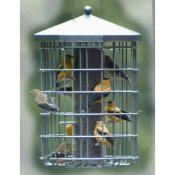
Let’s face it. Winter is the time that wild birds need us the most. Naturally occurring food sources are all but gone and they need to find ways to replace them. Add to this their increased energy demands to keep them warm and you’ve got the makings of a rush on your existing bird feeding stations. Having overcrowded feeders also increases the risk of them spreading diseases and could keep youngsters from being able to eat at all.

That’s why this is the perfect time of year to consider adding additional bird feeders to your backyard stations.

Read More …

November 21st, 2008 | 1 Comment

Top Ten Ways To Get Your Bird Feeders Ready For Winter Bird Feeding

As October comes to a close, there are a few things you need to make sure to do to get your feeders ready for winter. Winter time is when your birds depend on you to provide them with clean and safe feeding stations, wholesome quality food and an ample supply of water. It’s also the time that unsanitary conditions threaten to make birds sick because of the increased traffic at your feeders.

Here is my top ten list of things you can do to make this winter better for you and your backyard visitors.

Read More …

October 28th, 2008 | 1 Comment

Home | About | Contact | Privacy Policy | Powered by WordPress | Blue Weed Theme

Copyright 2008-2010 BirdOculars.com